
Columbus Kitchen Renovation: Countertop Choices for Real Ohio Life
In a busy Columbus kitchen, a countertop is more than a finish. It’s where you chop vegetables, set down grocery bags, roll out holiday cookies, help with homework, and sometimes leave a mug beside the sink longer than planned. The right material depends less on what looks perfect in a showroom and more on how your household actually cooks and cleans.
Quartz, granite, butcher block, solid surface, and laminate can all work well, but they ask for different habits. Here’s what to consider, from spills and hot pans to seams, edge details, and the changing indoor conditions that come with Central Ohio seasons.
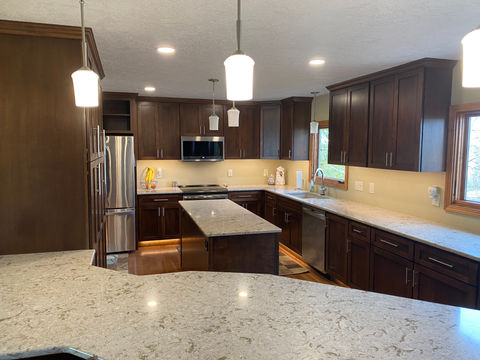
Start with your household’s kitchen habits
Before choosing a color or edge profile, think through a typical week. Do you cook most nights, bake in batches, or mainly need an easy-to-clean place for coffee and quick meals? Are hot pans routinely moved straight from the stove, or is using a trivet already second nature? Do you want to chop directly on the counter, or do you always reach for a cutting board?
Those answers help narrow the options. A household that values low-effort cleanup may prioritize a nonporous surface. A frequent baker may care more about a generous, uninterrupted work area. And if natural variation is part of the appeal, the distinctive patterning of granite may be worth a little more attention to care.
How five popular materials handle everyday use
Quartz: an easy-care option for busy kitchens
Engineered quartz is nonporous, so everyday spills are generally simple to wipe up and the surface doesn’t need sealing. Warm water, mild soap, and a soft cloth are usually suitable for routine cleaning; follow the specific manufacturer’s care instructions.
Quartz resists scratches well, but it isn’t scratch-proof. Use a cutting board, and take care with rough pads and harsh cleaners. The main everyday caution is heat: use a trivet for hot pans, countertop appliances, and slow cookers. A hot item or sudden temperature change can damage the surface.
Seams may still be visible, especially across a large island or long counter. Ask how the fabricator can position and finish them so they’re less conspicuous. For more on manufacturer care recommendations, see Caesarstone’s product care guidance.
Granite: natural pattern and strong everyday performance
Granite brings natural variation, with each slab offering its own pattern. It handles ordinary cooking well and is generally resistant to everyday scratches. Still, a cutting board protects both the counter and your knives. Trivets are also wise: stone can be affected by concentrated heat or sudden temperature changes.
Granite is not automatically stain-proof. Stone characteristics vary, so ask the fabricator whether your chosen slab should be sealed and what products are appropriate for cleaning it. Wipe up spills promptly, particularly oils and acidic foods, and avoid cleaners that can harm natural stone. The Natural Stone Institute’s care guidance explains why cleaning products and sealing recommendations depend on the stone.
Seams are part of many granite installations. Slab pattern, layout, and fabrication affect how noticeable they are, so review seam placement before the material is cut.

Butcher block: warmth, with more hands-on care
Wood adds a warm, inviting look and can be practical for baking and food prep. Some butcher-block surfaces are designed for direct cutting; others are better treated as work surfaces and protected with a cutting board. Confirm the intended use and finish before choosing.
Compared with stone, wood is more likely to show knife marks, scratches, and wear. That can be part of its character, and some damage can be sanded and refinished. But butcher block needs regular care: an oiled surface may need food-safe oil when it looks or feels dry. Avoid ordinary cooking oils, which can turn rancid.
Moisture deserves attention. Wipe up standing water, and be especially thoughtful around sinks and dishwashers. Wood responds to changes in moisture and indoor humidity, so seasonal swings between humid summers and dry winter heating can affect its movement. Good installation details and routine care matter.
Solid surface: smooth appearance and repairability
Solid surface can create a clean, consistent look, and seams may be less noticeable than with slab materials when the pieces are properly fabricated and joined. Some designs can also integrate the sink and counter for a streamlined appearance.
It’s nonporous and simple to clean with soapy water, but it still needs protection from hot pans. Use a trivet and cutting board. One advantage is repairability: minor scratches can often be addressed, while deeper damage may need professional attention. Check the care instructions for the exact product and finish; Corian’s maintenance guide offers an example.
Laminate: practical care at a more accessible level
Laminate is available in many colors and patterns and is straightforward to wipe clean. It can be a useful choice for households that want a practical surface without the upkeep associated with some natural materials.
Its vulnerabilities are concentrated heat, scratches, and water intrusion at seams or edges. Use a cutting board and trivet, and wipe up standing water, especially around the sink and backsplash joint. If the surface is deeply scratched or the substrate swells after water gets in, repairs may be more noticeable than repairs to solid surface or wood.
Seams, edges, and the shape of your counters matter
Material is only part of the decision. The placement of seams can affect the appearance and usability of a counter, particularly at an island, sink, or busy prep area. Ask where seams will fall, what they’ll look like, and how the layout relates to the slab or sheet dimensions and your cabinet support.
Edge profiles also shape the finished look. A simple eased edge works with many kitchen styles. Rounded or decorative profiles can soften the appearance, while a more squared profile can feel crisp and modern. The best option depends on the material, the design, and how the edge will be used, especially in a kitchen where children, stools, or tight walkways are part of everyday life.
Account for real Central Ohio seasons
Seasonal care is less about special routines for every counter and more about understanding the material. During holiday baking, any surface benefits from timely cleanup and a clear place to set hot pans. If you choose butcher block, watch for dryness during months when indoor heating runs often, and follow the finish’s oiling guidance. In humid summer weather, keep water from lingering around wood joints and sink edges.
Quartz, granite, and solid surface don’t need seasonal oiling, but no material should be treated as indestructible. Keep hot cookware on trivets, use cutting boards, and follow the care instructions for the product you select. For laminate, dry joints and edges promptly.

Match the material to the way you cook
For minimal routine maintenance, compare quartz and solid surface. If natural pattern and strong everyday durability are priorities, look at granite and ask about the care required for the specific slab. If you enjoy wood’s warmth and are comfortable with regular upkeep, butcher block may suit your kitchen. If easy cleaning and a broad range of looks matter most, laminate may be worth considering: provided you’re ready to protect it from heat, cuts, and standing water.
The details of your kitchen matter too: available counter space, sink location, cabinet support, window placement, and where seams can land. A thoughtful plan starts with your routines, not just a material sample. Mankind LLC’s kitchen remodeling page offers more information about kitchen projects, and our article on designing better prep space explores how layout can support everyday cooking.
If you’re considering a Columbus kitchen renovation, Mankind LLC offers free at-home consultations scheduled around your availability. We can discuss your household’s priorities and help you consider countertop choices as part of the larger kitchen plan. Easy financing options are available through our partnership with Synchrony. Contact us to talk about your project.
Comments