
Columbus Ohio Home Remodeling: Planning Concrete Driveway and Patio Work Before Ohio's Freeze-Thaw Season
A driveway or patio replacement can make everyday life at home more convenient and give outdoor spaces a fresh, finished look. But in Columbus and across Central Ohio, concrete work needs to be planned with more than appearance in mind. The timing of the pour, preparation of the ground, concrete mix, finishing, and curing all matter, especially as temperatures begin to drop.
Ohio’s freeze-thaw weather can be tough on exterior concrete. Water can soak into the surface, freeze, and expand. A properly selected and installed mix is designed to withstand outdoor exposure, but poor preparation, excess water in the mix, inadequate curing, or an overly worked surface can raise the risk of scaling, cracking, and premature wear.
If you’re considering a new driveway or patio, here’s what to know before choosing a date and comparing estimates.
Plan the project around the weather, and the ground
Concrete work depends on more than the temperature on pour day. The soil and base beneath the slab need to be suitable for installation, and newly placed concrete needs protection if cold conditions are expected during its early curing period.
Columbus’ cold-weather concrete guidance says concrete should not be placed on frozen or frost-covered base material and should be protected against freezing for at least five days after placement. That protection can involve insulating blankets or other approved methods, depending on the project and conditions.
For a homeowner planning ahead, spring and warmer parts of the year can offer a more straightforward scheduling window. Early fall may also be workable when the forecast allows adequate time for curing and protection. Later in the season, the schedule should be based on site conditions and a specific cold-weather plan, not simply a contractor’s promise to “get it done before winter.”
If you’re reading this in late fall, it may be wise to use the time to settle the design, scope, and contractor before the next suitable installation window. That way, you can start the season with a clear plan rather than rushing a placement into uncertain weather.
Why freeze-thaw cycles challenge concrete
Exterior concrete gets wet from rain, melting snow, and sometimes deicing products. When water inside the concrete freezes, it expands. Repeated wetting and freezing can put stress on the surface, especially if the concrete is highly saturated or its surface was compromised during installation.
Ohio Concrete’s recommendations for exterior concrete flatwork explain why air entrainment is important for exterior slabs: tiny air spaces in the mix provide room for water to expand as it freezes. The same guidance warns that adding excessive water can reduce performance and that finishing and curing practices affect surface durability.
This is why “concrete is concrete” isn’t a useful way to evaluate a quote. The mix, base preparation, drainage, placement, finishing, joints, and curing all contribute to how the finished surface performs.
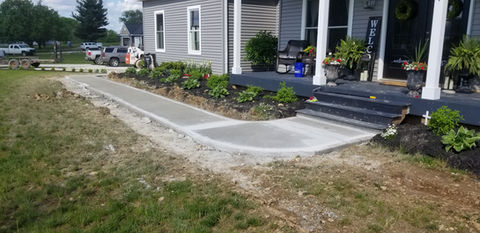
Details that matter in a driveway or patio replacement
A good project begins below the visible surface. During an estimate, ask how the existing concrete will be removed, how the ground will be prepared, and how the contractor will address drainage. A stable, properly prepared base helps support the slab; water that collects on or near the concrete can make winter conditions harder on the surface.
You should also discuss how the concrete will be proportioned for outdoor exposure and how the finish will be achieved. Exterior flatwork needs a practical, slip-resistant surface. Ohio Concrete’s guidance cautions against overworking the surface and finishing water back into the concrete. Practices that can affect durability.
Joints deserve attention, too. Concrete naturally moves and can crack as it shrinks. Planned control joints help guide where cracking is more likely to occur. Ask where the joints will go, how they will be made, and when they will be installed.
For a patio, consider how the new surface will connect to the home, steps, landscaping, and any existing pavers or retaining walls. For a driveway, clarify the intended use, access, edges, and areas that may carry heavier loads. These details help the contractor define a scope that fits your property rather than offering a generic square-foot price.

Why the lowest quote may not be the best choice
When comparing estimates for Central Ohio home improvements, it’s natural to look at the bottom line. But a lower price can reflect a different scope, materials, preparation, or curing plan, not necessarily a better value.
Compare estimates line by line. Do they describe removal and disposal? Base preparation? Concrete type and thickness? Joint layout? Drainage considerations? Curing and cold-weather protection? Do they explain when the driveway can be used again? If those details are missing, ask for clarification before comparing totals.
A contractor should be willing to explain what is included and why. If one estimate is substantially lower, ask what has been left out or changed. A clear, detailed proposal makes it easier to understand the investment and reduces the chance of surprises once work begins.
Questions to ask a concrete contractor
Before selecting a contractor for a driveway or patio, consider asking:
How will you prepare and compact the base?
What mix is appropriate for this exterior project?
How will you handle drainage and water flow?
Where will control joints be placed?
What curing steps are included?
If cold weather is forecast, how will the concrete be protected?
What will the schedule look like, including removal, placement, and access restrictions?
Can I review examples of similar concrete or paver work?
A reliable contractor should be able to walk you through the plan in plain language and explain how weather may affect timing. The American Concrete Institute’s cold-weather concreting guide also emphasizes protecting young concrete from early freezing and avoiding rapid temperature changes. Weather-dependent work needs communication and preparation, not guesswork.

Make a plan that fits your home and schedule
A driveway or patio replacement is a significant project, but thoughtful planning can make decisions easier. Start with how you want to use the space, then evaluate the site, drainage, materials, schedule, and installation details. Choose a contractor based on clear communication, a well-defined scope, and confidence in the workmanship, not price alone.
ManKind, LLC provides concrete and paver services in the Pataskala area and throughout Central Ohio. We offer free at-home consultations scheduled around your availability. If financing would help you plan the project, learn about available Synchrony financing options. And if a referral from a friend or family member leads to a signed contract, our referral program offers $100 off a current or future job.
Ready to talk through concrete work for your home? Contact ManKind, LLC to schedule a free consultation and begin planning with a team that serves Columbus and Central Ohio.
Comments